Overcome 3 Major Post-Processing Challenges of Additive Manufacturing
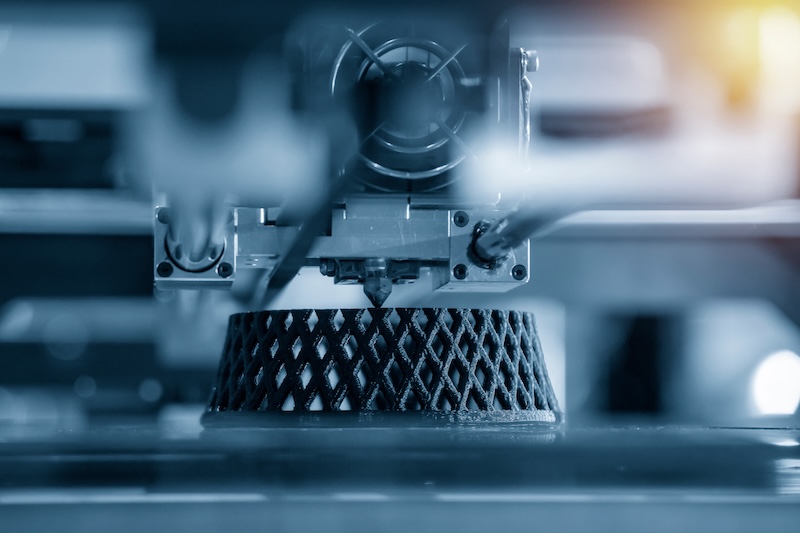
Additive manufacturing, often referred to as 3D printing, is a method that constructs physical objects from digital design files.
Today’s computer-aided design (CAD) software can translate highly complex creations into a layer-by-layer framework, allowing 3D printing machines to build everything from custom prosthetic limbs and medical implants to critical aerospace components like lightweight copper rocket engines and titanium airplane brackets.
Additive manufacturing can be done using many different materials, including metal, plastic, ceramic, concrete, and more. Objects are constructed by joining materials together in slices, layer by layer. The 3D printer deposits the material, fusing layers together to create a complete object.
While this process is a game changer for many manufacturers that want to make very detailed or small objects with precision, the results of the additive manufacturing process can cause issues. When an object is finished, there is often leftover residue and surface imperfections, both seen and unseen, that can jeopardize future manufacturing.
Three key issues to watch for are:
- Loose Powder Residue: Trapped, laser-sintered powder can remain in tight crevices both externally and internally.
- Rough Surface Finishes: A rough surface on the object is often left behind by the layer-by-layer printing process.
- Surface Contamination: Heat-induced free iron contamination can compromise the integrity of stainless steel.
If left unaddressed, these defects will compromise a part’s performance, especially in the medical and aerospace industries. That’s why high-stakes manufacturing sectors require a precise and reliable lineup of chemical solutions to deal with the post-processing of additive manufacturing objects.
JAYCO’s products can help solve these 3 specific 3D-printing parts cleaning issues.
Powder Residue Removal
3D printing methods leave behind loose metal powder trapped inside the complex internal lattices of the printed part. If not perfectly cleaned, this loose powder can eventually flake off the part and potentially ruin a future mechanical system. All the powder must be removed, even fine grains that cannot be seen by the human eye.
Advanced Ultrasonic Detergents: Engineered to penetrate complex internal structures, ultrasonic detergents can completely flush out loose powders. JAYCO’s ultrasonic and immersion cleaners are optimized for supreme cavitation which allows microscopic bubbles to forcefully collapse against the part’s surface and penetrate deeply into complex 3D-printed lattices. This safely forces out small powder particles and residues without damaging the intricate formation of the part.
Vacuum Assisted Cleaning Technology: For titanium components specifically, vacuum assisted technology can be integrated with aqueous degreasing systems. A combination of vacuum-assisted processes, ultrasonics, and turbulation creates a negative pressure environment, reduces surface tension, and facilitates efficient drainage. This process ensures the removal of loose titanium powder from intricate channels. JC 501SC and JC 201M are applicable for this process. Read more about using and purchasing vacuum assisted equipment by clicking here.
Rough Surface Finishing
3D-printed parts often have a rough surface finish right after they complete their fabrication. These parts can be gritty, grainy, and coarse. Some even have ridges from layers being fused together, or burrs left over from when support structures were sliced off.
Vibratory Tumbling Compounds: To facilitate isotropic finishing, these compounds help eliminate rough textures without damaging the part. JAYCO’s vibratory tumbling compounds and concentrated surface-active agents chemically smooth out imperfections, leveling out rough, printed layers and deburring parts.
Stainless Steel Citric Acid Passivation
3D-printed stainless steel can lose its corrosion resistance during the high-heat printing process due to free iron getting pulled to the surface.
Citric Acid Passivation: JAYCO’s CitraPass chemistries enable the important process of citric acid passivation. Products like JC CitraPass 5220 can be used to clean, brighten, and passivate 3D-printed stainless steel to meet strict ASTM 967 standards. These products are designed to strip away free iron and surface impurities, creating a protective oxide barrier to seal and protect printed titanium and stainless steel parts from corrosion.
If you are navigating the complex post-processing demands of additive manufacturing, JAYCO can help. Choose from our wide variety of formulas that address your cleaning and surface finishing needs.
Contact our team to discuss your specific project for additive manufacturing solutions.
SHARE THE KNOWLEDGE